The Missing Piece in Scotland’s Future
An Intergenerational Approach
Scotland is facing some of its biggest challenges in a generation. Loneliness, an ageing population, housing pressures, overstretched public services. These are usually treated as separate problems. But what if a single approach could help address all of them? Intergenerational practice is not a nice-to-have. It might just be the missing piece we need to heal our fragmented society.
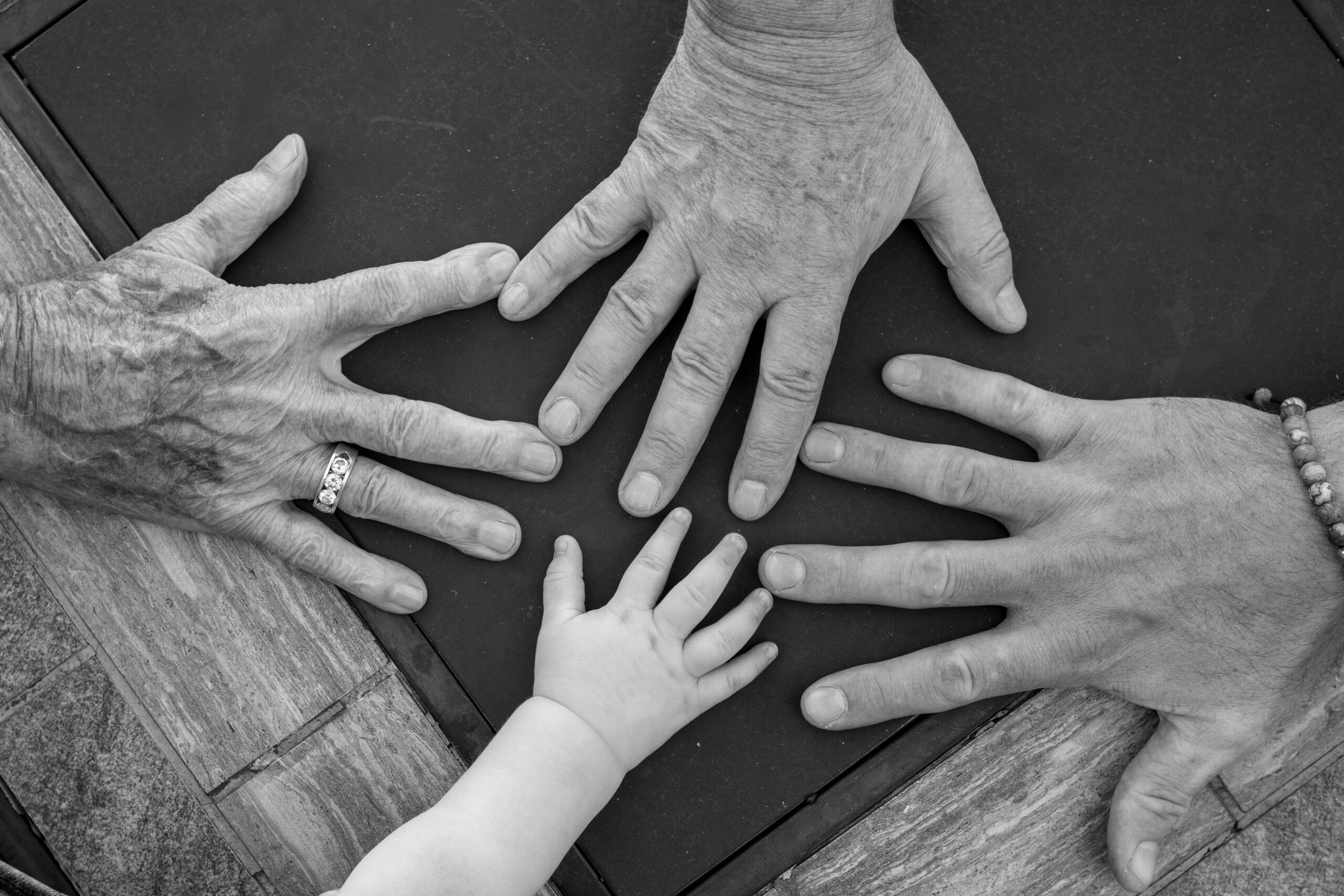
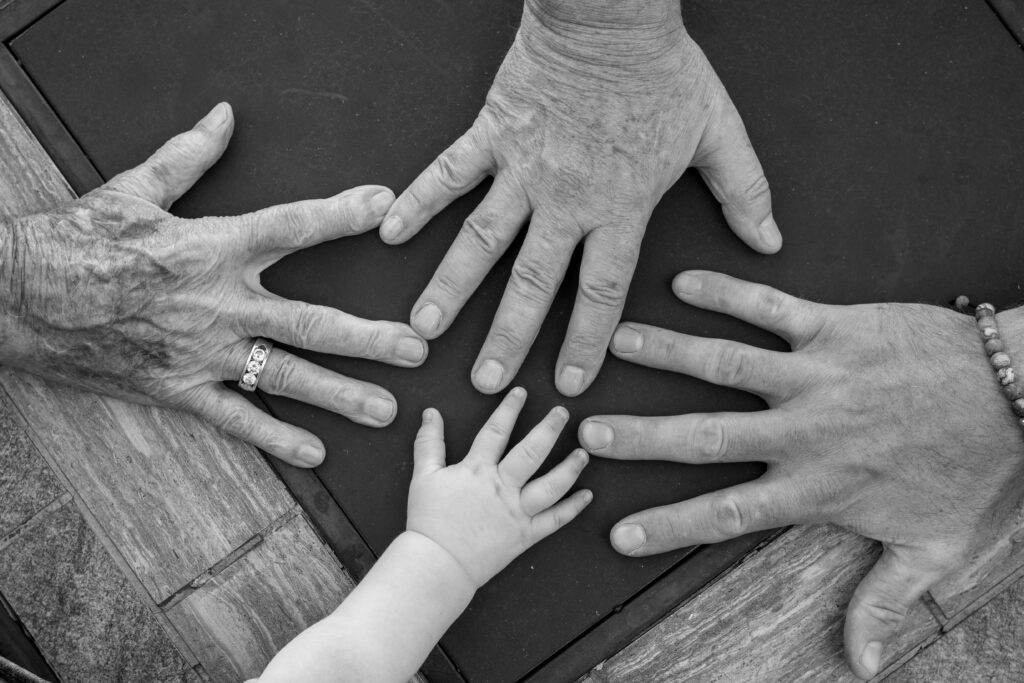
When I visited a primary school in east Edinburgh, as part of an intergenerational project bringing together children and elderly residents from a local care home, one pair kept coming up in conversation. Everyone there knew them. They had a strong bond, people said, and they looked so alike you might have thought they were related.
They were not, of course. One was very young; one was very old. And they had found each other through a deliberate effort to create the conditions for exactly that kind of connection.
Research across multiple countries consistently finds that intergenerational programmes improve wellbeing, reduce depression and strengthen self-esteem in older participants, while children develop more positive attitudes towards older people that tend to last. For older adults in care settings, the cognitive benefits are particularly significant, with some participants performing better on memory tests than those without regular contact with children. For children, intergenerational contact has been associated with improved vocabulary, confidence and pro-social behaviour.
What has changed
This kind of connection used to happen without anyone having to organise it. Across streets, in workplaces, through extended families, different generations shared daily life in ways that are now increasingly rare.
The reasons are well documented. Demographic shifts, urban planning that separates age groups, the decline of extended family networks, and the sorting effects of social media have all reduced the frequency and depth of contact between generations. The COVID-19 pandemic accelerated this, keeping young and old apart at precisely the point when community connections were most needed. Around 7.1% of people in Great Britain now experience chronic loneliness, and one in four adults reports feeling lonely often or some of the time.
A converging set of pressures
Scotland’s new Parliament has inherited a series of challenges that are typically addressed in isolation from one another. More than one million people in Scotland are now over 65, and the population aged 75 and over is projected to grow by 85%. More than 54,000 young people aged 16 to 24 are not in education, employment or training. NHS capacity is under sustained pressure. Housing demand outstrips supply. Mental health services are stretched across all age groups.
What is less often acknowledged is that many of these pressures share a common factor. Isolation, reduced community support and the absence of informal networks across generations all increase demand on formal services. The World Health Organization (WHO) has identified intergenerational contact as one of only three strategies with a proven track record in reducing ageism. An older person with strong community connections around them draws on formal health and care services differently to one without. The same applies to a young person with access to mentorship and cross-generational relationships.
The economic case
Scotland’s own Creating Intergenerational Communities project found that for every £1 invested, £6.97 of social value was generated, through improvements in mental and physical health, educational outcomes and community cohesion. That figure sits alongside a growing body of international evidence pointing to the cost-effectiveness of intergenerational approaches relative to the scale of the problems they address.
Despite this, intergenerational practice in Scotland remains project-by-project. It has not been built into how housing is designed, how schools relate to their surrounding communities, or how care services think about social connection as part of their offer.
A Glimpse into Scotland’s Future
We can continue to talk about the value of intergenerational work backed by research and evidence. What remains missing is a system that sees them as part of the infrastructure, rather than something that exists only through individual projects.
Picture a Scotland where we keep going like we have been. A few projects here and there get funded, produce some great results, and get written up as case studies. But when the money runs out, or the one person holding a partnership together moves on, it ends. Nobody replaces what was lost, because it was never anybody’s job to notice it was gone.
By 2031, that shows up in more than one place. Let’s look at the statistic that shows more than 54,000 young people aged 16 to 24 are not in education, employment or training. Without trusted adults and wider connections, many young people continue to face fewer routes into education, employment or training. As work becomes more automated, human connections will matter more than ever. Further down the line, by the mid-2030s, the over-75 population has grown by the projected 85%, exactly as predicted, and none of the connection that could have softened that demand ever became permanent. It lands, in full, on the NHS and on social care, which were already stretched before it arrived.
Now picture a different reality. By 2031, some of those 54,000 young people have a different story to tell. A young person who might have drifted has an older mentor, a work placement that came through someone’s contacts, a reason to stay connected to something. The number never disappears entirely, but it moves. And by the mid-2030s, in an NHS Scotland planning office, an analyst notices that demand for home visits is lower than forecast and begins to investigate why. The answer is not one single intervention, but thousands of everyday connections between generations, woven into neighbourhoods, schools and workplaces, creating stronger communities and reducing pressures before they reach crisis point.
Both futures are still a possibility. The difference isn’t one big decision, it’s whether intergenerational work stays something that is nice to have or becomes the missing piece that moves Scotland forward.
Scotland’s moment on the world stage
This autumn, Scotland will host the Global Intergenerational Congress in Glasgow from 29 September to 1 October 2026, bringing together thought leaders, researchers, practitioners and policymakers from across the world. That Scotland is hosting this Congress reflects the strength of the work already happening here and creates a real opportunity to show what embedding intergenerational practice at a systems level can look like in practice. Whether you work in housing, education, health, community development or care, this is a space to connect, share and shape what comes next. Find out more at generationsworkingtogether.org/events/conference.
By Kshitija Singh, Generations Working Together
BIO
I work as Policy and Campaign Officer at Generations Working Together. With a background in several areas of social policy, I am particularly interested in how policy through evidence, collaboration and advocacy can drive meaningful social change.
The author declares no relevant financial or organisational interests beyond their professional appointment at GWT.
References
- University of Stirling (2023) Healthy Ageing in Scotland (HAGiS): Key Findings
- Generations Working Together (2026) GWT Manifesto 2026-2031: Towards a Cohesive, Inclusive, and Intergenerational Scotland
- Generations Working Together (2025) Creating Intergenerational Communities: Programme Evaluation
- Campaign to End Loneliness / Office for National Statistics (2023) The State of Loneliness 2023
- Office for National Statistics (2025) Public Opinions and Social Trends, Great Britain: April 2025
- World Health Organization (2023) Connecting Generations: Planning and Implementing Interventions for Intergenerational Contact
- Gualano et al. (2023) The impact of intergenerational programs on children and older adults: a review
- Healthcare Homes (2025) What are the benefits of intergenerational relationships in our care homes?
- NIHR (2023) What are the social and mental wellbeing benefits of intergenerational practices in care homes and schools?
- Gutierrez et al. (2021) Intergenerational Programs among Children, Young and Elderly People with Educational Emphasis: An Integrative Review. Herald Open Access
- Department for Work and Pensions (2026) Young People and Work: Interim Report’
Image Attribution
Photo by Barnabas Piper on Unsplash